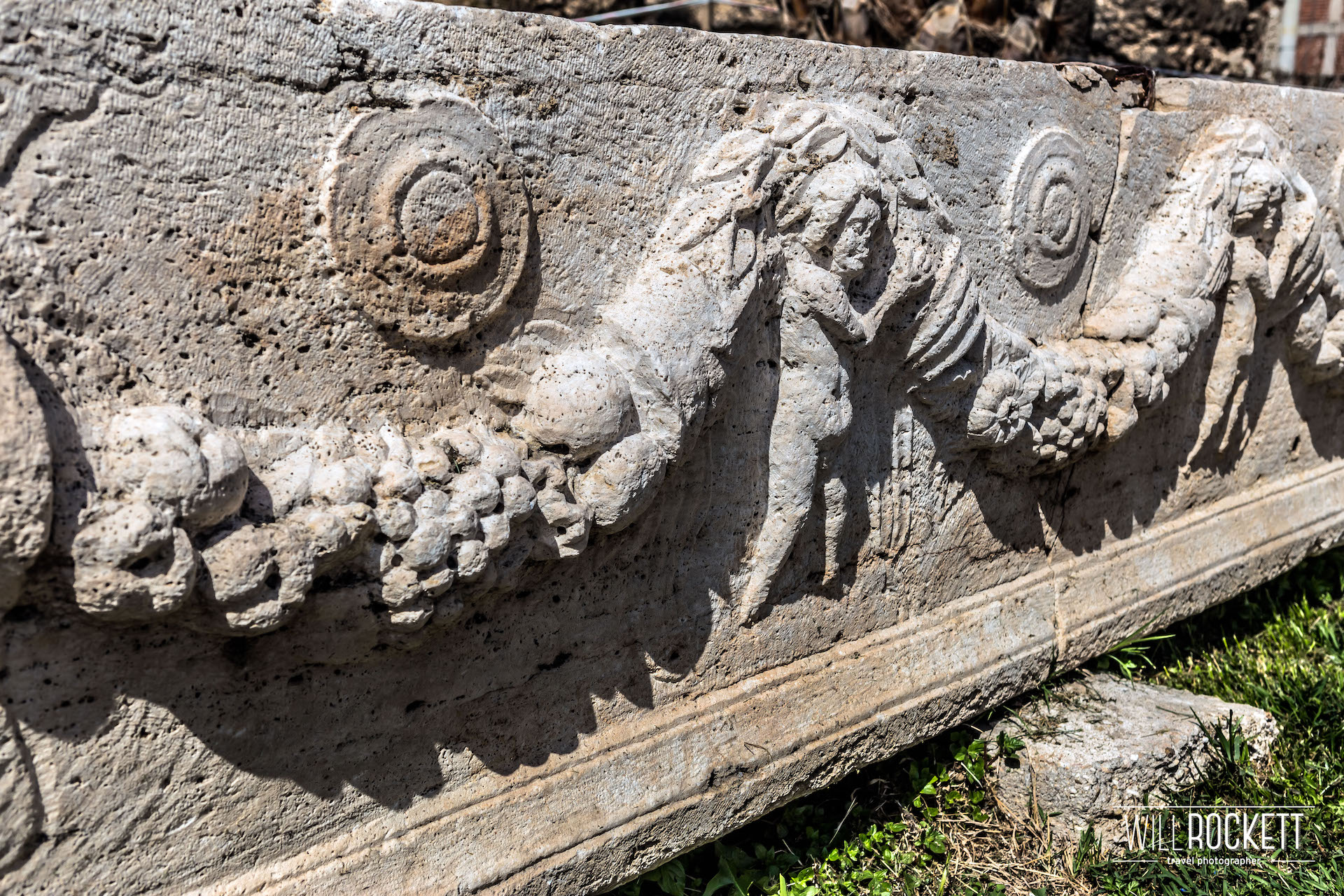
Philadelphia is the newest of the seven churches named in Revelation — a Pergamene settlement founded in the second century B.C.E., most likely by Attalus II or his brother Eumenes II, and named "brotherly love" in honor of their bond. When Attalus III died without an heir in 133 B.C.E., he bequeathed the city to Rome, ending the Attalid dynasty. Two things made Philadelphia famous in antiquity: its fertile soil and its devastating earthquakes. The rich plain produced exceptional grapes and wine, leading the city to revere Dionysus as its patron deity. But its citizens lived perpetually on edge — major earthquakes in 17 and 23 A.D. destroyed the city and left residents camped outside the walls, ready to flee at the first tremor. When Emperor Tiberius rebuilt it, the city's gratitude was expressed in a temple to its patron savior. The modern city of Alaşehir has overbuilt most of the ancient remains, though a sixth-century Byzantine basilica still stands.
Philadelphia in Christian History
Philadelphia and Smyrna share a distinction among the seven churches: they alone receive no rebuke in Revelation. John writes to the Philadelphians with unqualified encouragement — the church that has "but little power" and yet has kept Christ's word and not denied his name is the church to whom Christ says he has placed before them an open door that no one can shut.
I know your works. Behold, I have set before you an open door, which no one is able to shut. I know that you have but little power, and yet you have kept my word and have not denied my name. — Revelation 3:8
John also addresses the same adversaries he mentions at Smyrna: "the synagogue of Satan, who claim to be Jews and are not." These harassers, he promises, will be made to come and bow at the Philadelphians' feet. Ignatius visited the church on his way to martyrdom in Rome (107 A.D.) and followed up with a letter urging unity, faithfulness to their bishop, and resistance to Jewish false teaching. Eleven believers from Philadelphia were martyred alongside Polycarp in Smyrna in 155 A.D. — a detail recorded in the Martyrdom of Polycarp. The church that had little power proved, in the end, to have more endurance than the empires that tried to extinguish it.
Written content courtesy of Ronnie Jones III and Will Rockett, featured in To the Saints in Asia Minor.