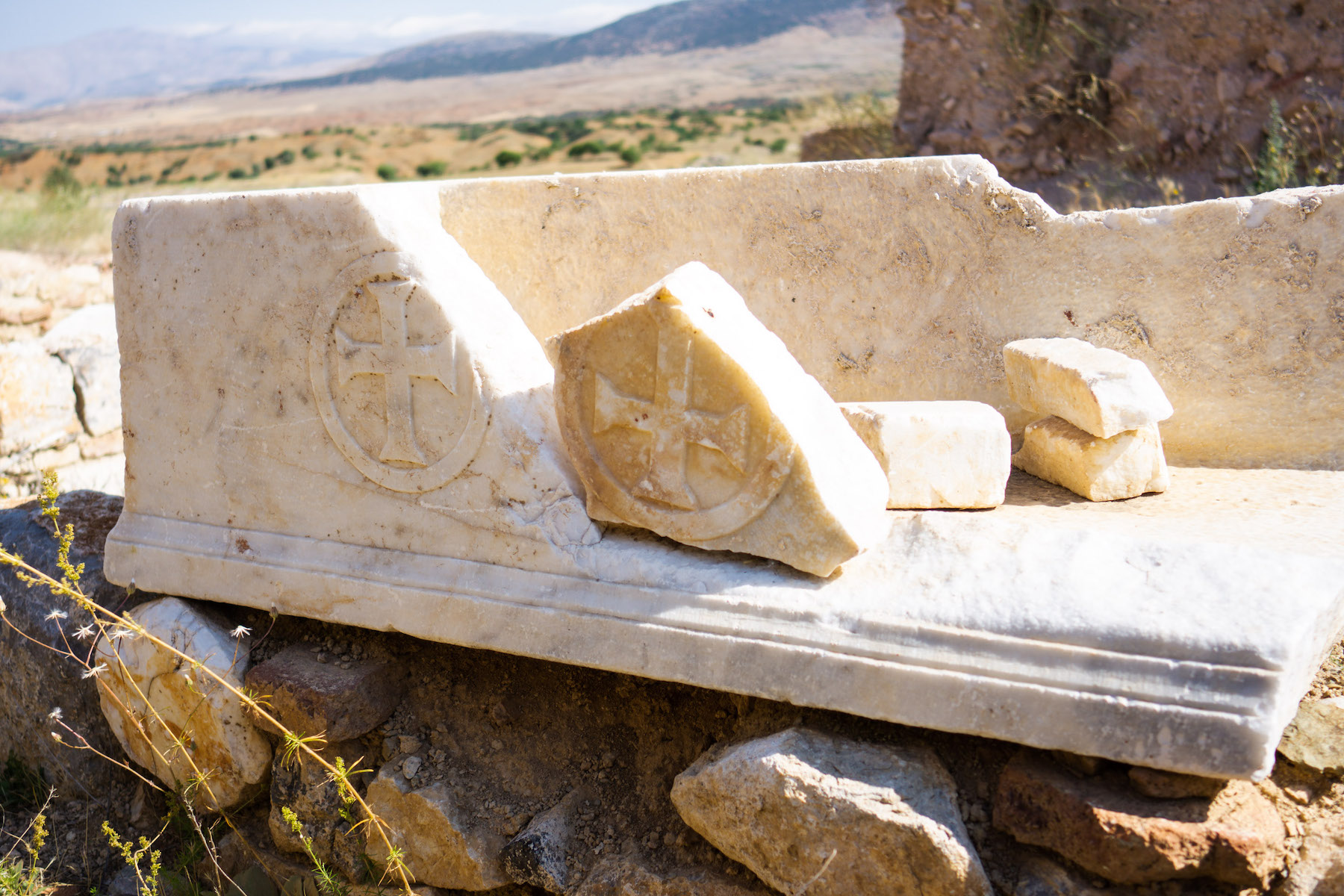
Founded by Seleucus Nicator — one of Alexander the Great's high-ranking officers who carved out a vast empire after Alexander's death — Antioch in Pisidia was one of sixteen cities Nicator named for his father Antiochus. The Seleucids invested heavily in the city, making it grand and well-defended against the warlike Galatians nearby. When Rome eventually took the region, it approached Antioch in Pisidia as a military center, settling retired Roman legionnaires there and creating a distinctly Roman culture in an otherwise Greek region. The city's language was Latin rather than Greek, the imperial cult was particularly strong, and a vast Temple of Augustus stood at its heart. Antioch in Pisidia was one of only a few cities to possess a copy of The Deeds of the Divine Augustus in Latin.
Paul in Antioch in Pisidia
The Seleucids had settled a significant Jewish population in Antioch in Pisidia — whether from the Aegean coast or from Syria and Babylon is uncertain — and it was this community that Paul and Barnabas sought out on their first missionary journey.
Acts 13 records their arrival after crossing the mountains of Pamphylia and Pisidia. Paul entered the synagogue on the Sabbath and preached a sermon that Luke records at length — one of the most substantial accounts of Paul's preaching in the entire New Testament. Many who heard it believed. But a faction of Jews stirred up opposition and persecution, and Paul and Barnabas were driven from the city.
For David, after he had served the purpose of God in his own generation, fell asleep and was laid with his fathers and saw corruption, but he whom God raised up did not see corruption. Let it be known to you therefore, brothers, that through this man forgiveness of sins is proclaimed to you. — Acts 13:36–38
It was here in Antioch in Pisidia that Paul first declared his turn to the Gentiles — a pivotal moment in the mission of the early church. Paul and Barnabas would return to the region on subsequent journeys, and as Christianity spread throughout the Roman world, the church at Antioch in Pisidia grew into an important center. A church was eventually built on the site of the first-century synagogue — possibly the very place where Paul delivered his sermon. Both joy and persecution mark the story of this city: the pattern that would follow the gospel wherever it went.
Written content courtesy of Josh Ryvers, artofwayfaring.com.