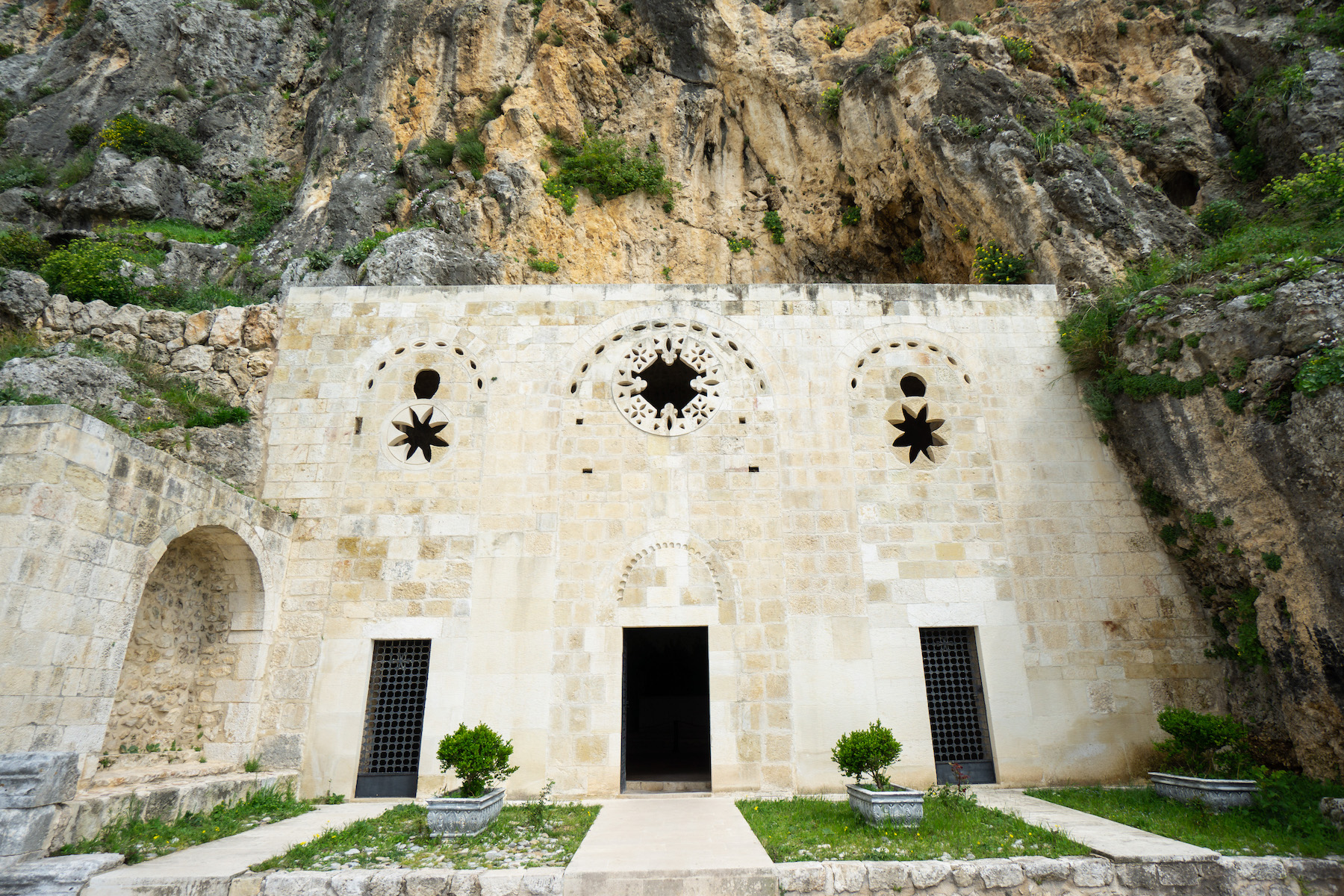
Antioch on the Orontes was one of the great cities of the ancient world — the third largest in the Roman Empire after Rome and Alexandria, and the capital of the vast Seleucid Empire before Rome took it in 63 B.C. Founded by Seleucus Nicator near the end of the fourth century and named for his father Antiochus, the city was positioned at a crossroads of trade routes running north-south along the Mediterranean coast and east-west between the Mediterranean and Persian regions. Its strategic importance made it a grand metropolitan city, home to people of all races, cultures, and faiths.
The Romans recognized Antioch's regional importance immediately and added to its prestige with aqueducts, temples, a stadium, and an amphitheater. In the first century it was the gateway to Rome's frontier with Persia, hosting armies, emperors, and leading politicians. Nature was less kind than Rome: violent earthquakes damaged the city repeatedly, and the silting of its port by the Orontes River gradually undermined its commercial dominance. The Persians sacked it in the early seventh century and deported its inhabitants; Arab forces took it two decades later. Centuries of warfare and earthquakes have left little trace of the once-proud city.
Antioch in Christian History
While Jerusalem is the undisputed origin of the Christian faith, the New Testament's frequent references to Antioch make clear that it was the second great center of the early church — and in some respects, its launching pad to the world.
After the martyrdom of Stephen and the scattering of the Jerusalem church, many early Christians fled to Antioch. There they shared the gospel not only with the Jewish community but — in a development that marks a decisive turn in the Acts narrative — with Gentiles as well. This large Gentile presence is likely why the Jerusalem council sent a letter to Antioch regarding Jewish customs (Acts 15:22), and why Paul confronted Peter there for his capitulation to the circumcision party (Galatians 2:11–14).
From Attalia they sailed back to Antioch, where they had been committed to the grace of God for the work they had now completed. On arriving there, they gathered the church together and reported all that God had done through them and how he had opened a door of faith to the Gentiles. — Acts 14:26–27
Barnabas brought Paul to Antioch, and they spent a year there teaching and building up the church. It was in Antioch that the believers were first called Christians — a name given to them by outsiders that would define the faith ever after. It was the church of Antioch that raised money for believers in Judea during famine, that sent out Paul and Barnabas on the first missionary journey, and that commissioned Paul for two more. Antioch was not merely a recipient of the gospel. It became its most prolific sender.
In the centuries after the New Testament, Antioch was recognized as one of the five patriarchal sees of the Pentarchy, alongside Rome, Constantinople, Jerusalem, and Alexandria. The ancient city is largely buried beneath modern Antakya, but every new construction project and archaeological excavation uncovers fresh traces of its remarkable past — and of the church that was born and sent from here.
Written content courtesy of Josh Ryvers, artofwayfaring.com.